
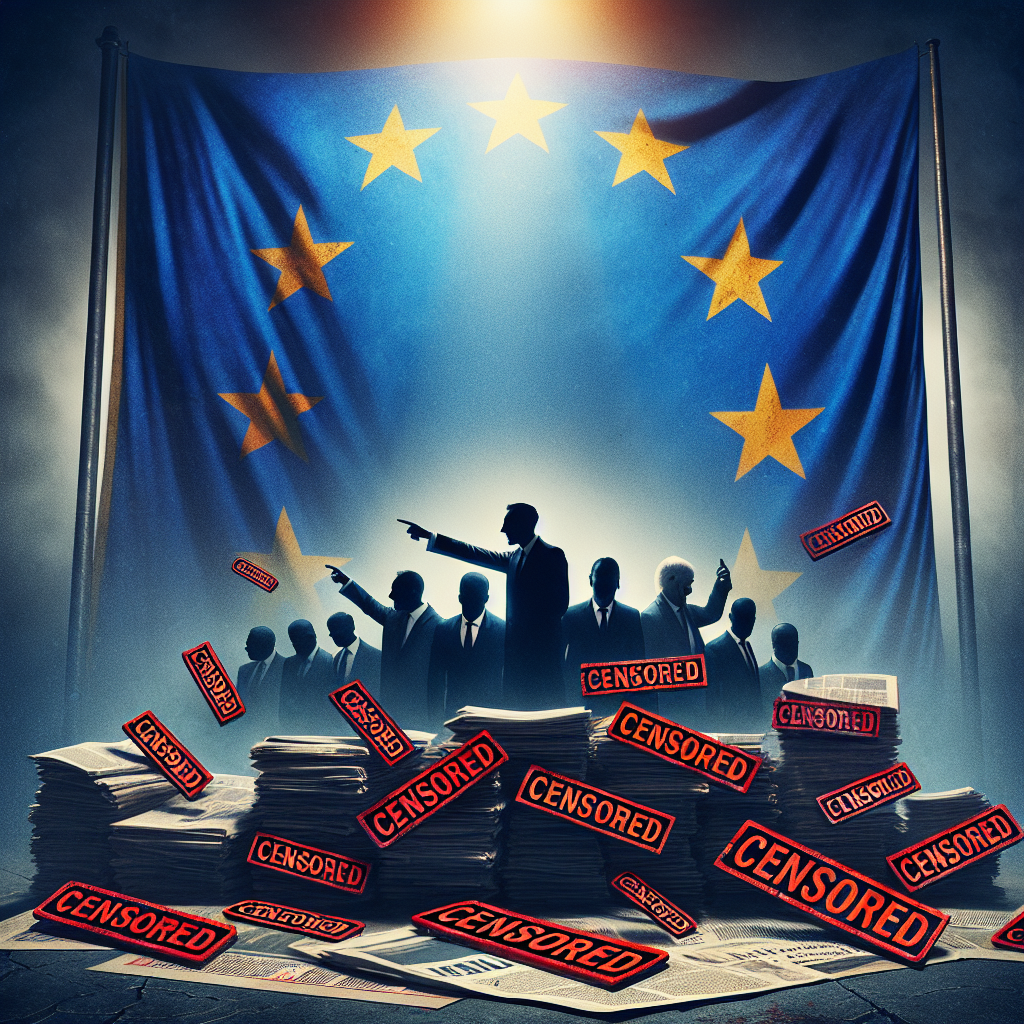
Understanding the Allegations: A Dive into EU’s Censorship Practices
In recent political discourse, Republicans have raised concerns over what they claim to be a decade-long censorship strategy employed by the European Union. These allegations have sparked a heated global debate about the nature and scope of censorship within the EU and its implications for international relations.
A Closer Look at the Allegations
According to the claims, the EU has been engaging in practices that go beyond normal regulatory activities. This includes:
- Restricting free speech through aggressive regulation.
- Manipulating media narratives to align with political agendas.
- Exerting influence over social media platforms to control public discourse.
The EU’s Stance on Regulation
The European Union has defended its regulatory actions as necessary measures to maintain social harmony and protect citizens from harmful content. Key points in their defense include:
- Ensuring public safety by reducing hate speech and misinformation.
- Promoting diversity and multiculturalism in media content.
- Upholding data privacy and security standards.
Global Repercussions: Echoes of Censorship Allegations Worldwide
The debate instigated by these allegations has not remained confined within Europe’s borders. It has reverberated across the world, challenging governments and societies to reassess their stance on issues of freedom and control.
Reactions from Other Nations
- Countries like the United States and Canada have expressed concern over the implications of such censorship for democratic freedoms.
- In nations with stricter governmental controls, such as China, the allegations have been seized to justify their own restrictive measures as comparable to EU practices.
- Developing countries are watching closely, as they seek to balance technological growth with regulatory frameworks.
The Role of International Organizations
- The United Nations has called for transparent and fair regulatory mechanisms, urging cooperation among nations to promote free expression.
- Human rights organizations are pushing for clarity in censorship definitions and insist on safeguarding freedom of speech globally.
- The European Commission is in the spotlight, facing pressure to justify its legislative and regulatory approaches.