
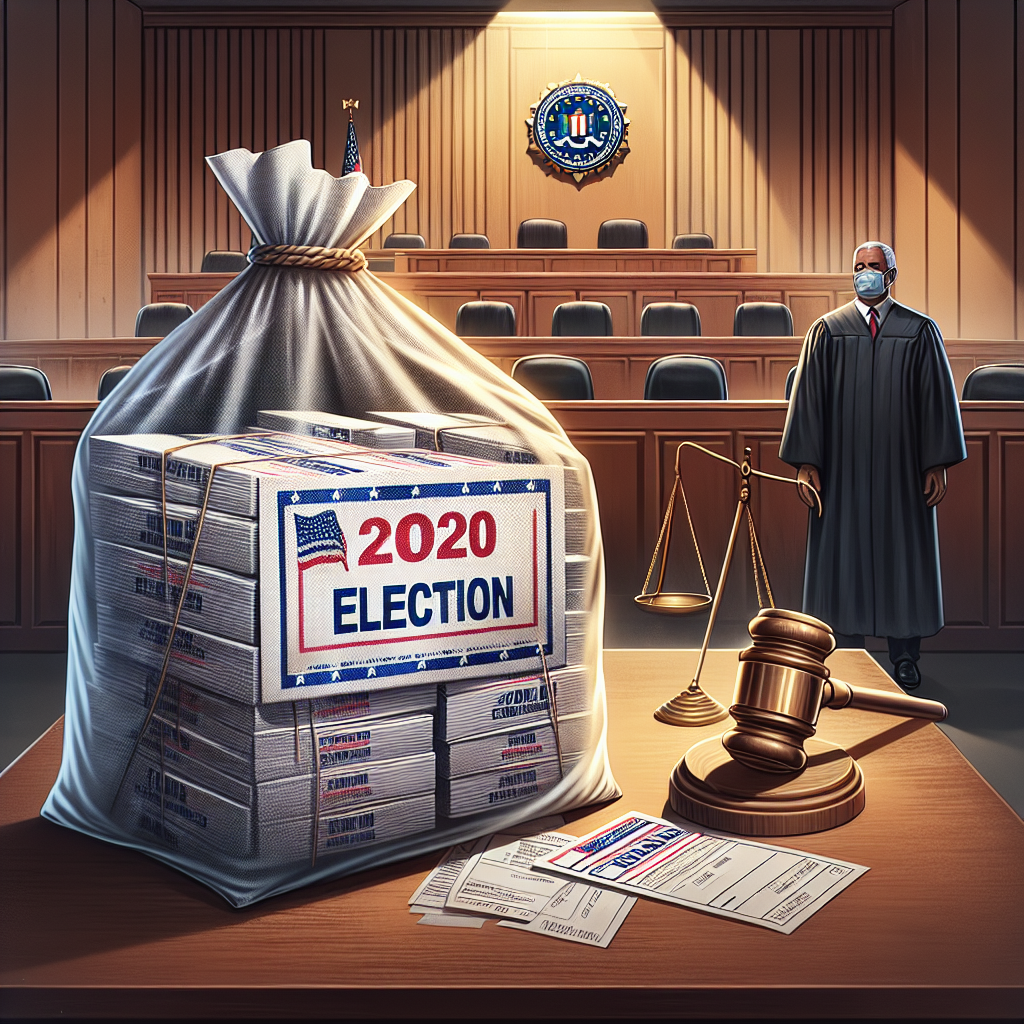
Georgia’s Legal Showdown with the FBI
The political scene in Georgia is heating up as a county steps into the ring against one of the nation’s most powerful law enforcement agencies—the Federal Bureau of Investigation (FBI). This showdown centers around the controversial seizure of ballots from the 2020 election, an event that has stirred local and national interest. The implications could reverberate widely, affecting not only the election integrity discourse but also the autonomy of local jurisdictions in the electoral processes.
The Controversial Seizure
The FBI’s decision to seize ballots from a Georgia county has come under scrutiny, raising questions about the federal agency’s reach and its potential overstep in local electoral matters. This has led the county to mount a legal challenge, asserting its rights and questioning the federal government’s intervention.
- The county claims the seizure was unwarranted and violated local authority.
- The legal challenge argues that such actions undermine public trust in elections.
- The move has sparked debates about election integrity and federal oversight.
Public Reaction and Political Ramifications
The clash has drawn significant media coverage and public attention, fueling debates across political lines. Many view it as a critical test of federal vs. state powers, with broader implications for future elections.
- Some community leaders support the county’s decision to fight back.
- The event has polarized voters, reflecting wider national divides.
- This legal battle could set a precedent for how election-related disputes are handled in the future.
Understanding the Legal Framework
The legal intricacies surrounding the dispute are complex, involving multiple layers of state and federal regulations. The county’s legal team is focused on presenting a robust case that challenges the legality of the FBI’s actions while also advocating for greater protection of local election processes.
Key Legal Foundations
- State sovereignty is a major aspect, emphasizing the county’s jurisdiction over its own election procedures.
- The challenge questions the application and scope of federal investigative powers in state-administered elections.
- Arguments are being made about the potential infringement of voter privacy rights.
Implications for Future Elections
- An outcome in favor of the county could empower other jurisdictions to assert their rights.
- A ruling aligned with the FBI may affirm federal oversight, albeit controversially, in state matters.
- This legal confrontation might influence legislative measures aimed at clarifying the scope of federal and state powers in electoral contexts.