
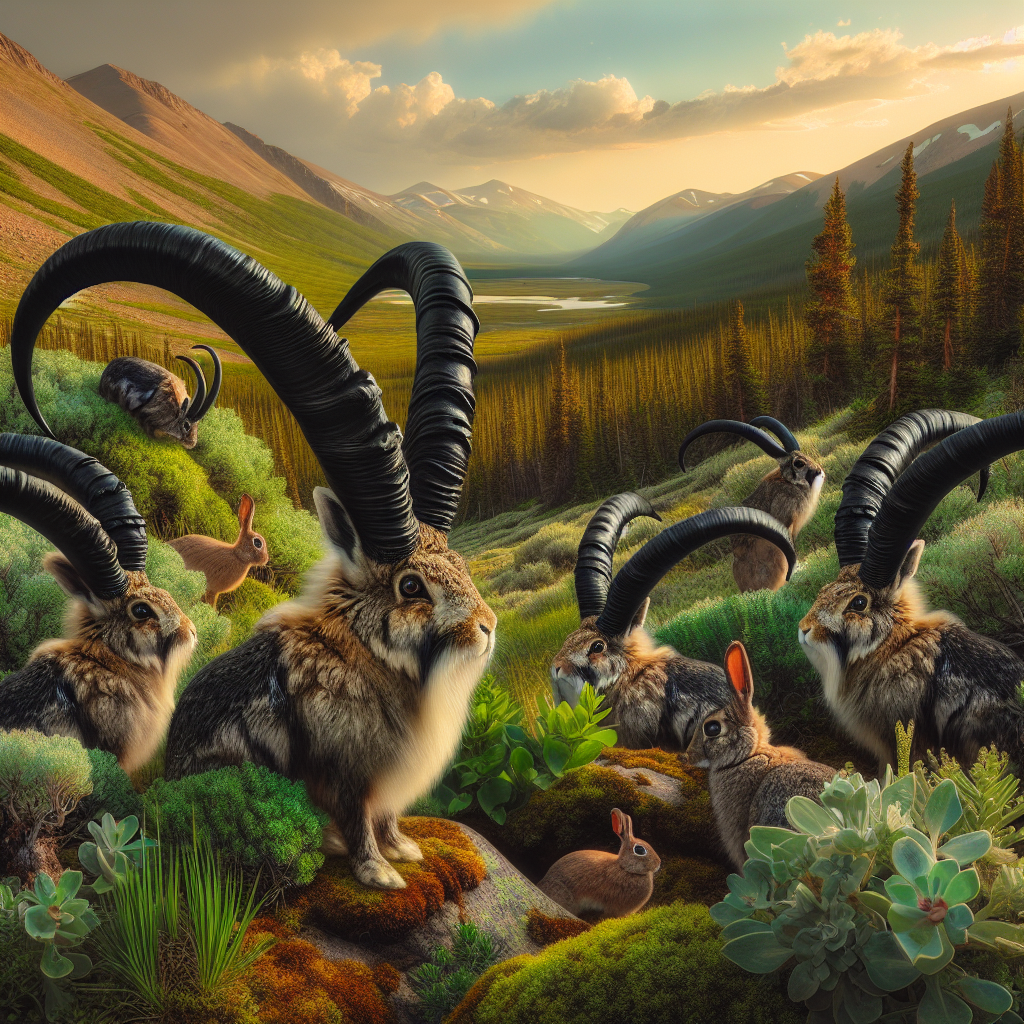
Nestled amidst Colorado’s serene landscapes and picturesque wildlife, an eerie phenomenon has captivated the scientific community and intrigued nature enthusiasts. The rabbits in this region have begun developing bizarre physical characteristics—namely, black horns and tentacle-like protrusions. As strange as this may sound, this phenomenon has scientific explanations and profound implications for our understanding of wildlife and environmental changes. In this article, we delve into the **causes, impacts, and significance** of this peculiar biological anomaly.
## Understanding the Phenomenon
### What are the Horns and Tentacles?
The peculiar growths observed on Colorado rabbits, primarily on their heads and around facial regions, are not mythical transformations but manifestations of a well-documented disease. These are, in fact, benign tumors caused by a viral infection.
– **The responsible virus:** _Shope papillomavirus_ (SPV)
– **Appearance:** Wart-like masses, which can develop into horn or tentacle shapes
– **Common areas affected:** Ears, head, neck
While these may appear bizarre, such infections have existed under the scientific radar long before media sensationalism brought it to light. Typically found in cottontail rabbits, the virus-induced growths could range from barely visible warts to extensive protrusions.
### Cause of the Growths
The horn-like formations are linked to the infamous _Shope Papillomavirus._
– **Virus origin:** Discovered by Dr. Richard E. Shope in the 1930s
– **Transmission:** Spread via skin contact or through contaminated surfaces
– **Environmental factors:** Habitat changes and human interference can exacerbate virus spread
The virus infects keratin-producing cells which results in the iconic horn-like growths. The impact of these changes, while seeming alarming, really opens a window into wildlife health and habits.
## The Role of Environment
### Impact of Climate Change and Habitat Alteration
Environmental factors undoubtedly play a role in increasing susceptibilities of wildlife to infections like the Shope papillomavirus.
– **Climate change:** Alterations in temperature and precipitation patterns
– **Habitat destruction:** Urban sprawl and deforestation disturbing natural habitats
These changes may not only make rabbits more vulnerable to existing viruses but can also accelerate the mutation rates of these pathogens, potentially increasing their virulence.
### Coexistence with Other Wildlife
Rabbits are integral to Colorado’s ecosystem, and their ability to live and interact with other species could spread the virus beyond observable hosts.
– **Role as Prey:** Predators may inadvertently become virus carriers
– **Effects on Other Animals:** Could expose other wildlife to new infections
Understanding these interrelations offers insights into why such growths may be becoming more prevalent now despite their historical presence.
## Implications for Wildlife and Human Interactions
### Potential Impacts on Ecosystems
The ramifications of viral infections in rabbits can ripple across entire ecosystems.
– **Predator-prey dynamics:** Illness in rabbits can affect predator nutrition and choices
– **Vegetation and habitat health:** Change in rabbit populations impact grazing patterns
These shifts may seem subtle but can eventually lead to more significant ecological changes.
### Human Concern and Misunderstandings
While the sight of these peculiar rabbits may trigger concern or fear, the virus is known primarily to affect rabbits.
– **Human risk:** No direct threat as the virus is not zoonotic
– **Conservation and awareness:** Critical for preserving rabbit populations and understanding the larger ecological picture
Sometimes, scientific ambiguity breeds misinformation or panic, where understanding and awareness should prevail.
## The Importance of Scientific Study
### Ongoing Research Efforts
The appearance of such growths urges the scientific community to investigate further.
– **Virus pathology studies:** Understanding virus-host interactions
– **Genetic studies:** Insights into whether certain rabbit populations are more susceptible
Through targeted studies, scientists aim to mitigate the impacts of these growths on rabbit populations and ecosystems.
### Enhancing Conservation Efforts
Conservationists are keen to develop strategies to protect infected rabbit populations and curb the spread of the virus.
– **Public education campaigns:** Raising awareness on the impact of habitat protection
– **Protective measures:** Encouraging responsible outdoor recreation and habitat preservation
By aligning the public with conservation priorities, greater strides can be made towards maintaining ecological balance.
## Conclusion
The mysterious black horns and tentacle-like protrusions on Colorado rabbits paint an intriguing, albeit bizarre, picture of the complexities involved in wildlife health. While these growths owe their existence to a known virus and known ecological shifts, they are a reminder of our shared environment’s ever-evolving nature. Understanding, education, and conservation will be key in unraveling these mysteries and ensuring the future health of rabbit populations and the ecosystems they enrich. Let us cultivate awareness and curiosity around these revelations as we peer into the unseen workings of the natural world.